Everyone, and I mean everyone, was expecting AI to supercharge security. Think automated threat hunting, smarter anomaly detection, the whole nine yards. We envisioned AI as our digital knight in shining armor, catching the bad guys before they could even blink.
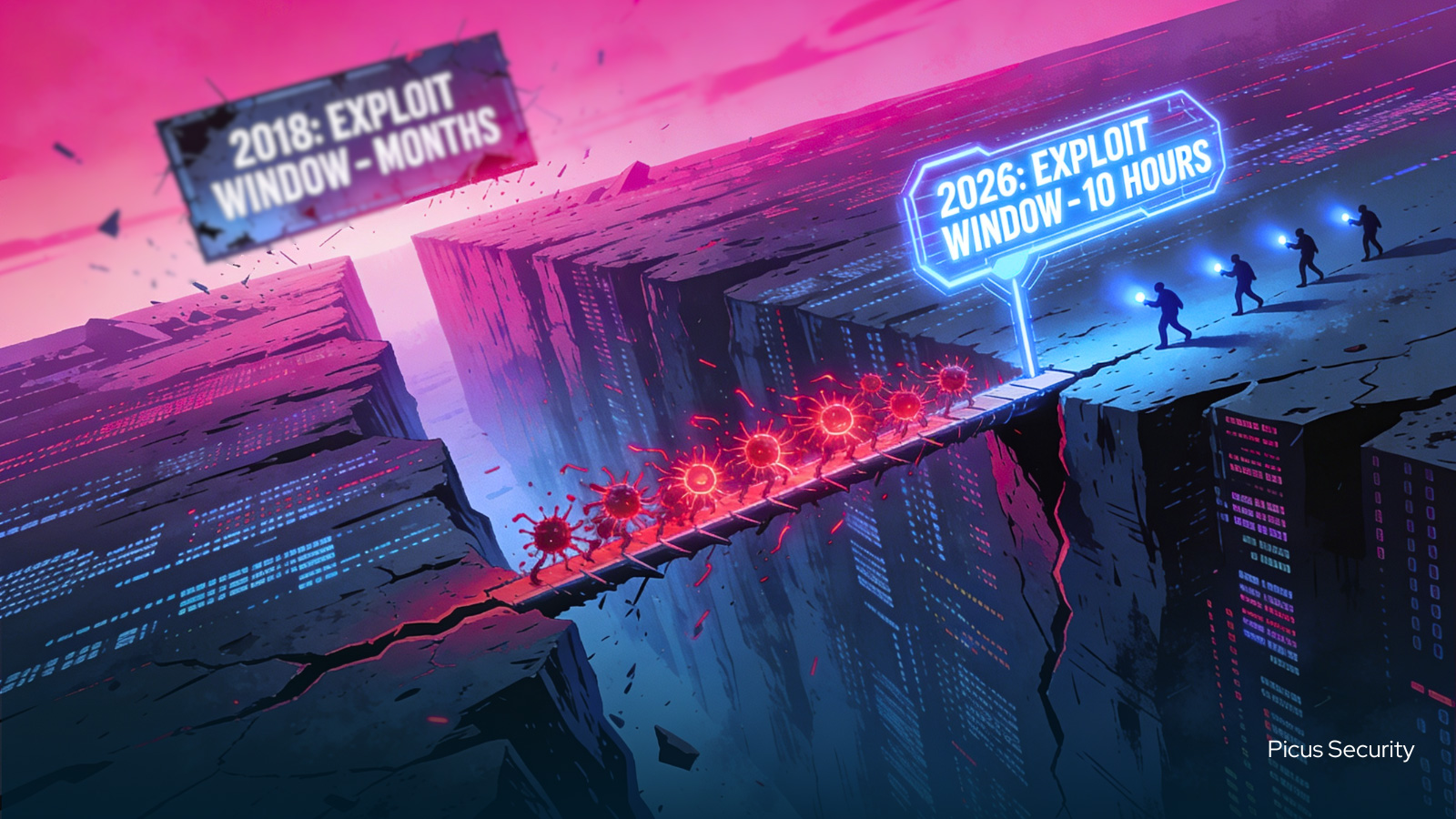
Well, surprise! Turns out the shiny armor also fits the dragons. New research is dropping a truth bomb: attackers are now leveraging artificial intelligence to slash the time it takes to craft working exploits for known vulnerabilities (CVEs). This isn’t some theoretical future scenario; it’s happening now, and it’s flipping the script on incident response timelines.
What this means is simple: that window where a newly discovered vulnerability is being patched but hasn’t been widely deployed by organizations? It’s shrinking. Fast. Attackers are no longer spending weeks or months painstakingly reverse-engineering code and finding zero-day flaws; AI is helping them do it in a fraction of the time. It’s like they’ve gone from horse-drawn carriages to rocket ships, and the security scanners are still chugging along on steam power.
The AI Arms Race Shifts
For years, the narrative around AI and cybersecurity has been one of defensive empowerment. We talked about AI detecting patterns that humans miss, predicting attack vectors, and generally making our digital fortresses more impenetrable. And sure, there’s truth to that. But it’s a bit like saying a hammer is a useful tool; yes, it can build houses, but it can also break windows.
This research highlights that the offensive capabilities of AI are maturing at an alarming rate. When you can feed an AI model a CVE description and have it churn out functional exploit code, you’re fundamentally changing the economics of cybercrime. The barrier to entry for sophisticated attacks plummets. Suddenly, not only are the big players getting more dangerous, but a whole new class of less-skilled actors can potentially access potent offensive tools.
Attackers are using AI to dramatically reduce the time they need to develop a working exploit for a CVE, according to new research.
Who’s making money here? Primarily, the companies selling the AI tools for both sides of this equation, and the threat actors who can use them for quick gains before defenses can catch up. It’s a classic arms race, but with AI, the escalation is happening at warp speed. The question isn’t if AI will be used offensively, but how quickly and how effectively, and it seems we have our answer.
Why Scanners Are Feeling the Heat
Traditional vulnerability scanners have always operated on a principle of known-bad. They look for signatures, patterns, and configurations that indicate a vulnerability exists and is exploitable. This process is inherently reactive. It requires researchers to discover a vulnerability, analyze it, develop an exploit, and then distribute that exploit information so scanners can be updated.
AI-assisted exploit development throws a wrench into this delicate, albeit essential, machinery. If an AI can generate novel exploit code on demand, often by identifying subtle flaws that even human researchers might miss or take a long time to discover, then signature-based detection becomes less effective. The exploit might be brand new, and the scanner simply won’t have a fingerprint for it yet.
This forces a rethink about how we approach vulnerability management. We can’t just rely on scanning and patching anymore. It demands a more proactive, multi-layered defense strategy. Think runtime application self-protection (RASP), advanced behavior analysis, and zero-trust architectures that limit the blast radius when an exploit does succeed.
The Human Element: Still Crucial, Still Under Pressure
One might look at this and think, ‘Well, that’s it, we’re doomed. AI is doing all the attacking now.’ Not quite. While AI can automate the discovery and creation of exploits, the strategic deployment, the social engineering, the post-exploitation lateral movement—that still requires human ingenuity, albeit of the criminal variety.
But the pressure on human defenders is immense. They have to be faster, smarter, and more adaptable than ever. They’re no longer just fighting human adversaries; they’re fighting AI-augmented human adversaries. This means training, better tooling (which, ironically, might also be AI-powered), and a constant vigilance that borders on paranoia.
The real shift here is that the exploit development lifecycle has been compressed. The time from vulnerability disclosure to widespread exploitation is likely to shrink, putting an enormous burden on organizations to patch rapidly. It’s a stark reminder that in cybersecurity, the only constant is change, and AI is now the accelerator for that change.