You know what’s wild? The average time to detect a breach is still north of 200 days. Two hundred days. That’s half a year spent blissfully unaware that someone’s rummaging through your digital sock drawer. Most organizations still picture cyber defense as a fortress problem: build stronger walls, add more guards, buy another detection engine. But modern incidents rarely crash through the front gate. They drift in disguised as routine activity, hide inside legitimate processes, and quietly accumulate risk long before anyone labels them an “incident.”
That, my friends, fundamentally changes the role of the SOC entirely.
The best SOCs today are not simply detecting attacks. They are reducing the amount of uncertainty the business can accumulate. Every unidentified process, every unenriched alert, every delayed investigation becomes operational debt that compounds silently until it erupts into downtime, compliance issues, customer impact, or reputational damage. It’s like letting a small leak go unfixed; eventually, your whole basement floods.
Prevention, then, is no longer about blocking everything at the perimeter. It is about shrinking the time between “something changed” and “we understand exactly what it means.”
That requires three things:
- Continuously updated visibility into emerging threats.
- Immediate context around suspicious activity.
- Investigation outputs teams can act on without friction.
Here’s how mature SOCs implement those steps to shut down incident risk before it escalates into business disruption. Seriously, it’s not rocket science, but it sure beats staring at a sieve.
Out with the Old IOCs, In with the New
Your detection capability is only as current as the threat intelligence behind it. A SIEM firing on yesterday’s IOCs is a filter with holes in it. And adversaries know exactly where those holes are. Newly registered domains used in phishing campaigns, fresh C2 infrastructure, malware variants that dropped last week: none of that trips an alarm if your feeds haven’t caught up. It’s like showing up to a gunfight with a butter knife.
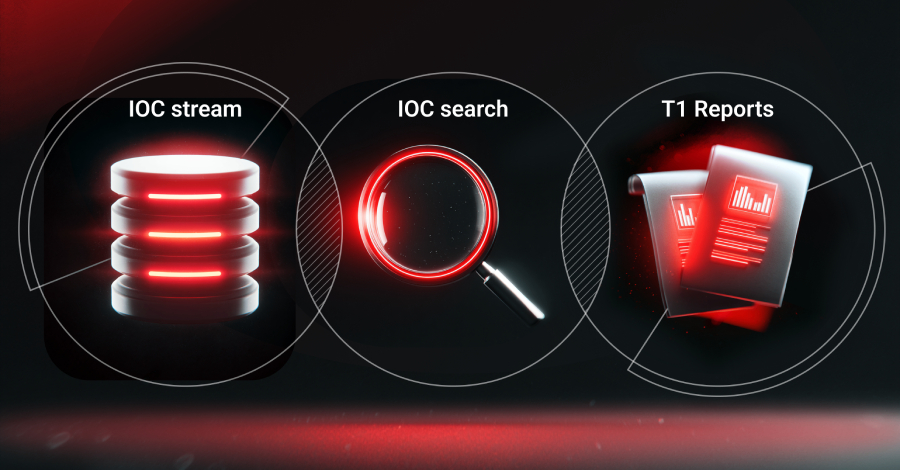
ANY.RUN’s Threat Intelligence Feeds deliver a continuous, high-confidence stream of IOCs — IP addresses, domains, URLs observed in active sandbox sessions and incident investigations across more than 15,000 organizations and 600,000 SOC professionals. These aren’t recycled from third-party aggregators; they come from real execution environments where real malware runs, every day. This is the good stuff, the stuff that’s actually happening now, not what happened last quarter.
These aren’t recycled from third-party aggregators. They come from real execution environments where real malware runs, every day.
The feeds integrate directly into SIEM, firewall, EDR, and threat intelligence platforms via standard formats (STIX/TAXII, CSV, JSON), meaning your detection stack refreshes automatically without analyst intervention. No more manually crunching spreadsheets and wondering if you missed something.
This allows SOCs to:
- Detect campaigns earlier.
- Identify malicious infrastructure before execution spreads.
- Reduce blind spots in monitoring pipelines.
- Automate detection updates without overloading analysts.
Business Outcome: Keeping monitoring systems continuously updated reduces the probability of silent attacker dwell time. That directly lowers the risk of operational disruption, ransomware escalation, compliance failures, supply-chain propagation, and expensive incident recovery cycles. In practice, fresh intelligence turns detection systems from passive archives into active radar arrays. It’s the difference between a dusty old map and a real-time GPS.
Context: The Elusive Unicorn of Security Ops
One of the biggest hidden risks inside modern SOC operations is not alert volume itself. It is incomplete context. The question isn’t whether analysts can triage effectively; it’s whether the system is asking them to do work that could already be done before the alert hits their screen. Who’s actually making money when analysts are drowning in manual lookups?
Threat Intelligence Lookup gives analysts on-demand access to a deep, continuously updated intelligence database. Teams can quickly investigate IPs, domains, URLs, file hashes, processes, mutexes, registry keys, and other artifacts, while immediately seeing related malware families, network behavior, execution chains, detection labels, and associated infrastructure. Analysts receive investigation-ready context in seconds. It’s like getting the Cliff Notes for every suspicious activity.
This dramatically improves triage speed and confidence, especially during high-volume alert periods where rapid prioritization determines whether threats are contained early or allowed to spread. It’s not just about being faster; it’s about being smarter.
Business outcome: Alert triage time drops sharply; false positive rates fall; Tier 1 teams can handle more volume without sacrificing quality; critical alerts get the response speed they deserve because they’re no longer indistinguishable from noise. See? It’s not just about technology; it’s about enabling your people to actually do their jobs.
From Report to Response: Eliminating the Lag
Even when a threat is identified correctly, organizations often lose valuable time translating technical findings into actionable response steps. This gap between “analysis completed” and “response initiated” creates dangerous operational lag. Security engineers, incident responders, management teams, and compliance stakeholders all require different forms of information. If analysts must manually prepare reports for each audience, investigations slow down precisely when speed matters most.
This is where response-ready reports come in. Instead of spitting out raw logs and expecting someone else to decipher them, these reports package findings in a format tailored for immediate action and executive understanding. Think clear summaries, prioritized actions, and impact assessments, all generated automatically. It’s about removing the middleman – the one who turns technical data into a PowerPoint presentation that takes another day.
Business outcome: Reduced operational lag means faster incident containment, minimizing the blast radius and associated costs. It also improves communication and buy-in from non-technical stakeholders, ensuring that resources are allocated efficiently for remediation. Ultimately, it’s about turning information into action and avoiding the dreaded “wait and see” approach that always ends in tears. Who benefits? Everyone willing to look past the PR fluff and see who’s actually getting things done.