One statistic that chills the blood: Turla, the notoriously persistent Russian state-sponsored hacking group, has apparently been refining its custom backdoor, Kazuar, since at least 2017. But the latest intel from Microsoft isn’t about continuity; it’s about a radical architectural transformation. Kazuar is no longer just a backdoor. It’s now a modular, peer-to-peer botnet, engineered for maximum stealth and, more importantly, persistent access. This isn’t your garden-variety malware; this is a calculated architectural shift designed to outlast detection.
For those keeping score, Turla is widely assessed to be affiliated with Russia’s Federal Security Service (FSB), specifically Center 16. Their MO has long involved targeting governments, diplomatic corps, and defense sectors across Europe and Central Asia. They’ve even been observed piggybacking on existing compromises by groups like Aqua Blizzard to further Moscow’s strategic aims. This latest move, though, speaks volumes about their operational philosophy: embed, observe, and endure.
As Microsoft’s report puts it, starkly: “While many threat actors rely on increasing usage of native tools (living-off-the-land binaries (LOLBins)) to avoid detection, Kazuar’s progression into a modular bot highlights how Secret Blizzard is engineering resilience and stealth directly into their tooling.” This isn’t about blending in; it’s about building a self-sustaining ecosystem of compromise that’s inherently harder to dismantle. It’s a deliberate move away from the ephemeral towards the entrenched.
The Architectural Overhaul: From Monolith to Modular Ecosystem
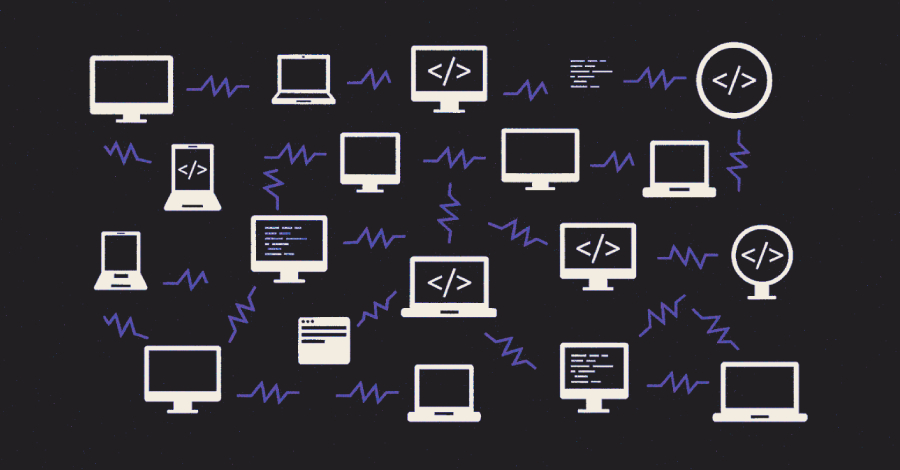
The core of this evolution lies in Kazuar’s metamorphosis. It’s shed its old “monolithic” skin for a modular bot ecosystem. Think less of a single, massive tool and more of a Swiss Army knife, where each component has a specific, well-defined role. This modularity isn’t just for show; it offers unparalleled flexibility, dramatically reduces the observable footprint of any single component, and facilitates a much broader range of tasking. Attack vectors still often involve droppers like Pelmeni and ShadowLoader to initiate the process, but what follows is a distributed, coordinated network.
At the heart of this new Kazuar are three distinct module types:
-
Kernel: This is the brain. It orchestrates the botnet, dispatches tasks to Workers, manages communication with the Bridge, maintains logs, performs crucial anti-analysis and sandbox evasion checks, and tailors the operational environment via a granular configuration. This config dictates everything from C2 communication parameters and exfiltration timing to task management and file collection strategies.
-
Bridge: Acting as a sophisticated proxy, the Bridge sits between the Kernel and the ultimate Command and Control (C2) server, mediating their interactions.
-
Worker: The workhorse. Workers are responsible for the on-the-ground operations: logging keystrokes, hooking Windows events, tracking assigned tasks, and meticulously gathering system information, file listings, and even details from Messaging Application Programming Interface (MAPI).
This division of labor is where the magic — or rather, the menace — truly lies. The Kernel, for instance, exposes multiple internal communication channels (Windows Messaging, Mailslot, named pipes) and diverse external C2 contact methods (Exchange Web Services, HTTP, WebSockets). It even implements an internal “election” system to designate a single Kernel leader responsible for communicating with the Bridge on behalf of all its peers.
“Elections occur over Mailslot, and the leader is elected based on the amount of work (length of time the Kernel module has been running) divided by interrupts (reboots, logoffs, process terminated).”
This leader election process, based on operational longevity and resilience against disruptions like reboots, ensures a stable command structure. Once a leader is established, it silences other Kernels, allowing it to uniquely log activity and request tasks. This isn’t just clever; it’s a design choice aimed squarely at redundancy and stealth.
Orchestrating Persistence: The Kernel’s Role in Command and Control
The Kernel’s ultimate mission is to poll the C2 server for new instructions, decipher incoming messages, delegate those tasks to the Workers, update its own configuration on the fly, and then diligently report back the results. It’s a feedback loop designed for perpetual operation. Furthermore, its integrated task handler empowers it to process commands issued directly by the elected leader.
Data harvested by the Workers isn’t immediately shipped out. Instead, it’s aggregated, encrypted, and temporarily stored in a dedicated working directory. This on-disk staging area acts as a central hub for all module operations, ensuring data consistency across different execution contexts. Everything is meticulously organized within this directory, with tasking, collection output, logs, and configuration material kept in separate, clearly defined locations. This compartmentalization is key to maintaining operational integrity and reducing the chances of a single compromised artifact revealing the entire operation.
Why Does This Evolution Matter for Threat Actors and Defenders?
This pivot by Turla represents a significant architectural gamble that appears to be paying off. By moving to a modular P2P botnet, they’ve achieved several critical objectives. First, resilience. If one node goes down or is discovered, the rest of the network can continue to operate. The P2P nature means there’s no single point of failure like a traditional C2 server. Second, stealth. Each module is smaller and performs a more specialized function, making it harder to detect with signature-based tools. The use of multiple communication methods and anti-analysis techniques further obfuscates their presence. Third, persistence. The design prioritizes long-term access, allowing Turla to maintain a foothold in compromised networks for extended periods, continuously gathering intelligence for the Kremlin.
This development is a stark reminder that even seemingly established threat actors are constantly innovating. They’re not just iterating; they’re fundamentally rethinking their tooling and architecture to adapt to the evolving defensive landscape. For cybersecurity professionals, it means staying ahead requires not just understanding individual malware strains but grasping the underlying strategic shifts in how sophisticated adversaries plan and execute their operations. The Kazuar evolution is a case study in enduring presence, a modular ghost in the machine that promises to be exceptionally difficult to exorcise.
🧬 Related Insights
- Read more: Security Compliance Frameworks Compared: SOC 2, ISO 27001, and HIPAA
- Read more: China-Backed Silver Fox APT Strikes with Tax-Themed Phishing
Frequently Asked Questions
What does the Kazuar botnet do? Kazuar has been re-engineered into a modular peer-to-peer botnet. Its primary functions include gaining stealthy and persistent access to compromised systems, logging user activity, gathering system information, and exfiltrating data to attacker-controlled servers.
Is Kazuar used by a specific nation-state? Yes, Kazuar is associated with the Russian state-sponsored hacking group Turla, which is assessed to be affiliated with Russia’s Federal Security Service (FSB).
How is Kazuar’s new architecture different from its previous version? Previously a monolithic .NET backdoor, Kazuar is now a modular botnet composed of three distinct components: Kernel (coordinator), Bridge (proxy), and Worker (data collector). This modularity enhances flexibility, stealth, and resilience compared to its older, more integrated design.