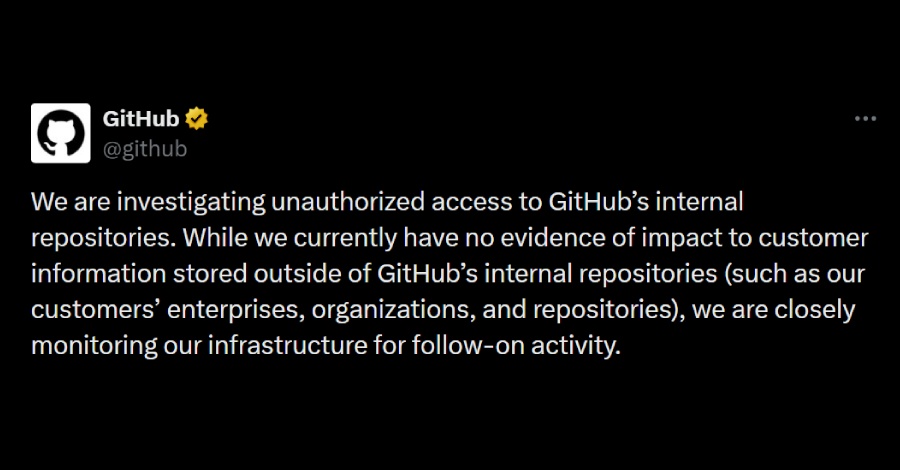
The coffee’s gone cold. The screen’s glaring. And GitHub, the supposedly secure digital fortress for code, has apparently been picked clean. Not just a few stray files, mind you. We’re talking about 4,000 internal repositories. Vanished.
This isn’t some niche bug affecting a handful of users. This is a gut-punch to the very concept of trust in cloud-based code repositories. A group calling itself TeamPCP has been boasting about it. And GitHub, bless their bureaucratic hearts, finally confirmed it. Took ‘em long enough, didn’t it?
Why does this matter? Because those aren’t just lines of code. They’re blueprints. They’re proprietary secrets. They’re the digital DNA of companies, big and small. Think intellectual property. Think potential vulnerabilities waiting to be weaponized.
Did They Just Get Lucky, or Is This Something Deeper?
GitHub’s official statement, as always, is a masterclass in corporate evasion. They’re busy “investigating.” They’re “working to understand the scope.” Translation: They’re scrambling to figure out how badly they screwed up and how to spin it. It’s the same tired song and dance.
Look, breaches happen. That’s a given in this messy digital age. But when it’s a company that holds the keys to so much of the world’s code, it’s not just an oopsie. It’s an indictment. This isn’t a crack in the dam; it’s a gaping hole.
TeamPCP, or whoever they are, claims they snagged access through a third-party tool. A tool that had legitimate access to GitHub. This is the juicy bit. It suggests that the entry point wasn’t some brute-force attack on GitHub itself. No, it was likely through a less secure, adjacent service. The weakest link. We’ve seen this movie before, haven’t we?
How Did This Happen (According to GitHub)?
According to GitHub’s own (eventual) admission, the attackers use a compromised third-party integration. This integration, which had authorized access to an organization’s repositories, was then used to exfiltrate the data. They’re being coy about the specific integration, which is hardly surprising. Naming names would mean pointing a very public finger at a partner, and also admitting they didn’t have proper oversight on what their partners were up to.
“The threat actor gained access to certain GitHub customer data, including private repositories, through a compromised third-party integration.”
This quote, from GitHub’s damage control department, is key. It’s not just about GitHub being insecure. It’s about the interconnectedness of everything. One weak link, and the whole chain can shatter.
What’s the Actual Impact Beyond the Hype?
Beyond the sheer embarrassment for GitHub, this breach has real-world consequences. For starters, imagine a startup pouring years of work into a groundbreaking project, only to have its core algorithms and trade secrets end up on the dark web. Poof. Years of innovation, potentially gone. Or worse, weaponized by nation-states or competitors.
And for developers? It’s a chilling reminder that your digital workshop isn’t as secure as you might think. This isn’t about forgetting your password. This is about the very infrastructure you rely on being compromised. The trust factor just took a nosedive.
Historically, we’ve seen breaches like this lead to mass migrations. Companies rethink their reliance on certain platforms. They diversify. They bring things back in-house. This could be the catalyst for a significant shift in how developers and organizations manage their code. We’re looking at a potential exodus from overly centralized platforms if the security concerns aren’t addressed with more than just words.
Will This Lead to More Security Checks for Integrations?
One would hope so. This incident highlights a glaring vulnerability: the blind trust placed in third-party tools. Companies, and platforms like GitHub, need to implement far more stringent vetting processes for integrations. It’s not enough for a tool to be popular; it needs to be demonstrably secure. And the onus can’t solely be on the end-user to discern good from bad. GitHub should be setting the bar, not just following it.
This is the kind of event that forces a re-evaluation. It’s messy, it’s painful, but it’s necessary. We’re paying the price for convenience, and sometimes that price is far too high.
🧬 Related Insights
- Read more: ShareFile’s Double Flaw: Unauthenticated RCE via Config Hijack and Web Shell Drop
- Read more: Bluekit Phishing Kit Adds AI Assistant, Threatens Real People
Frequently Asked Questions
What exactly was stolen from GitHub? Thousands of private internal repositories were stolen. This includes source code, proprietary data, and potentially sensitive project information.
Who is TeamPCP? TeamPCP is the threat actor group that has claimed responsibility for the GitHub breach, stating they used a compromised third-party integration to access the repositories.
Will my code be safe on GitHub after this? While GitHub is investigating and implementing security measures, this breach raises significant concerns about the security of third-party integrations and overall platform security. Users should remain vigilant and review their integration permissions.