Some 7.8. That’s the CVSS score. High. For good reason.
Microsoft Defender is wringing its hands over CVE-2026-31431, dubbed ‘Copy Fail.’ This isn’t some obscure academic curiosity. It’s a direct ticket to root access on systems that run, well, most of your cloud. We’re talking Red Hat, SUSE, Ubuntu, even Amazon Linux. Millions of servers. Millions of Kubernetes clusters. All potentially compromised by someone who can already run code on them. Joy.
The ‘Copy Fail’ Fiasco Explained
Look, the technicals are a bit gnarly, but the upshot is simple. A flaw in the Linux kernel’s crypto-subsystem, specifically the AF_ALG module, lets attackers corrupt file caches. Not the on-disk file, mind you. The in-memory version. Think of it like scribbling on a photocopy of a blueprint without touching the original drawing. Except this blueprint is for a critical system file, like /usr/bin/su, the very thing that lets you become root.
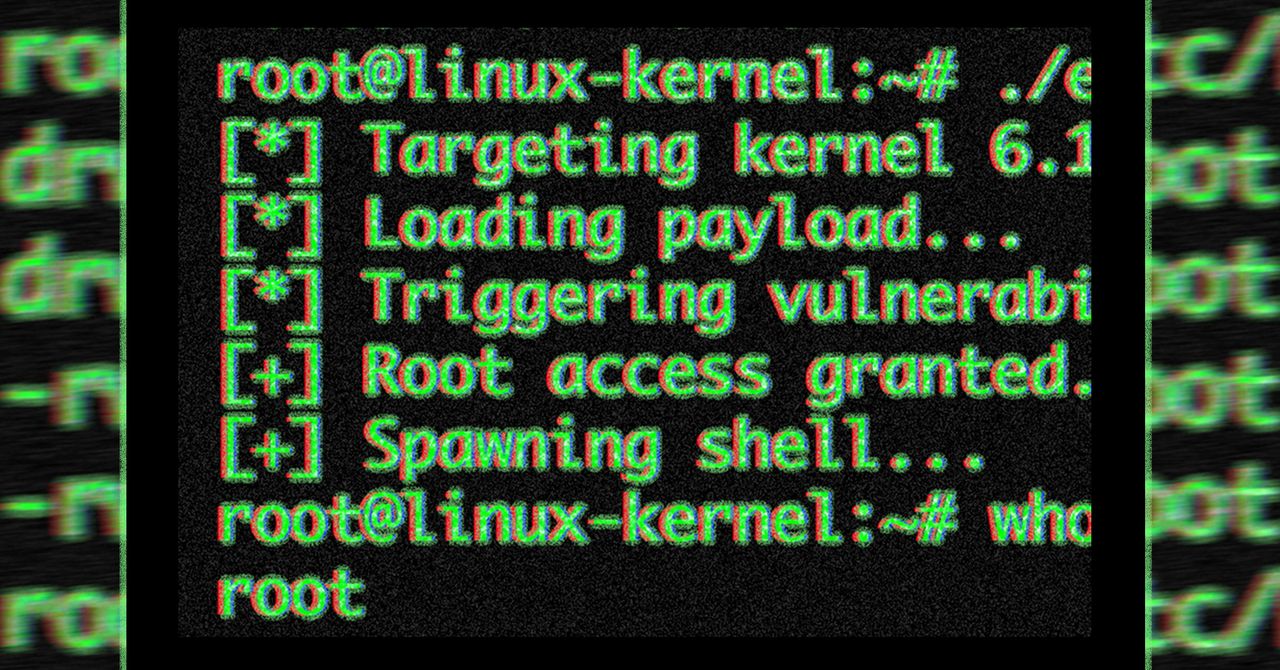
And get this: the exploit is small. Tiny. A mere 732 bytes. It works deterministically. No race conditions needed. It can be slipped into a malicious CI job, a compromised container, or just used by someone who already has a foothold via SSH. The exploit can corrupt a setuid binary, and when that binary is executed—boom. Instant root. This is not theoretical; proof-of-concept code is already out there.
Why Now and Why Does It Matter?
This vulnerability has been lurking since 2017. Yes, 2017. For years, a bug that allows easy root access has been sitting there, waiting for someone to notice. Microsoft is now seeing preliminary testing activity. CISA has added it to their Known Exploited Vulnerability catalog. The clock is ticking. Attackers will absolutely be piling on.
Its stealth is key here. The corruption happens in memory. It’s difficult to detect unless you’re specifically looking for it. And in cloud environments, where containers share page caches, it’s a one-way ticket to breaking out of your sandbox and potentially compromising other tenants on the same host. This is the stuff of nightmares for cloud security teams. It’s the kind of bug that causes widespread outages and breaches, not because it’s sophisticated, but because it’s brutally effective.
Is Your Server Safe?
If you’re running any Linux distribution with a kernel from 2017 until the latest patched versions, you’re likely vulnerable. That includes Ubuntu (even the newer LTS releases), Amazon Linux 2023, RHEL 10.1, and SUSE 16. The list goes on: Debian, Fedora, Arch. Basically, if you’re running Linux in the cloud and haven’t patched religiously, you’re exposed.
This isn’t just about a single server. Think about the millions of workloads. The CI/CD pipelines. The shared hosting environments. A successful exploit here can lead to container breakout, multi-tenant compromise, and lateral movement. It’s a chain reaction waiting to happen. The implications for businesses, especially those running critical infrastructure or handling sensitive data, are massive. It’s a prime example of how fundamental kernel flaws can undermine the security of entire cloud ecosystems.
“A bug in the Linux kernel’s crypto-subsystem can be abused by an attacker to corrupt the cache of any readable file, including setuid binaries.”
This vulnerability isn’t just a technical problem; it’s a reminder of the fragility of our digital infrastructure. The fact that a bug this old, this impactful, can surface now, after years of development and security hardening, is frankly depressing. It’s a stark illustration of the ongoing arms race between defenders and attackers, and sometimes, the attackers find the keys to the kingdom left carelessly on the counter.
“The primary prerequisite for exploitation is the ability to execute code as a local non-privileged user on a system running a vulnerable Linux kernel with the affected crypto module enabled.”
So, what do you do? Patch. Now. And if you can’t patch immediately, implement detection and hunting rules. Microsoft Defender has put out some guidance, and CISA has flagged it. Don’t wait. The ‘Copy Fail’ vulnerability isn’t going away, and neither will the attackers looking to exploit it. It’s a high-severity local privilege escalation, and it’s already out there.
🧬 Related Insights
- Read more: March Security: Hackers Hit Medtech, Data Theft Soars
- Read more: Iranian Hackers Hijack US PLCs: The Digital Sabotage We Saw Coming
Frequently Asked Questions
What does CVE-2026-31431 do? It allows an unprivileged user on a vulnerable Linux system to gain root privileges. This is achieved by corrupting the kernel’s cache of critical system files like setuid binaries.
How widespread is this Linux vulnerability? It affects a vast range of major Linux distributions, including Red Hat, SUSE, Ubuntu, and Amazon Linux, potentially impacting millions of cloud servers and Kubernetes clusters worldwide.
Can I fix this vulnerability? Yes. The primary mitigation is to apply the security patches released by your Linux distribution. Microsoft Defender and CISA have also provided additional guidance and detection methods for affected systems.