For ages, the ransomware battlefield looked like a sprawling, chaotic bazaar. Hundreds of small-time hustlers, each with their own jury-rigged tools, shouting their wares. We expected more of the same – maybe even more noise, more digital detritus as new groups sprung up like digital weeds after a rainstorm. But here’s the thing: that’s not what happened.
Instead, we’ve witnessed a seismic shift. The ransomware ecosystem, once a sprawling, fragmented mess of hundreds of individual operators, has undergone a dramatic consolidation. It’s like watching a dozen fledgling startups suddenly get bought out by a few tech giants. The age of the lone wolf operator, or the small, agile gang, is being eclipsed by the return of the RaaS (Ransomware-as-a-Service) titans. In Q1 2026, the top 10 ransomware groups collectively devoured a staggering 71% of all reported victims. This isn’t just a return to a previous state; it’s a more concentrated, potentially more dangerous, iteration of that dominance.
This consolidation means fewer, but far more capable, adversaries. Think of it like this: instead of dodging dozens of amateur pickpockets, you’re now facing a few highly organized, impeccably equipped heist crews. The implications for defenders? They’re massive.
From Fragmentation to Fortress
For two years, the trend was clear: fragmentation. More groups meant more scattered attacks, harder attribution, and a general sense of digital anarchy. The number of active groups had ballooned to a peak of 85 in Q3 2025, with the top 10 groups accounting for a mere 57% of victims. But the first quarter of 2026 flipped that script. Suddenly, the top 10 groups weren’t just holding their own; they were gobbling up the market share, leaping to 71.1% of all DLS-posted victims. This concentration hasn’t been seen since the much smaller ecosystem of Q1 2024.
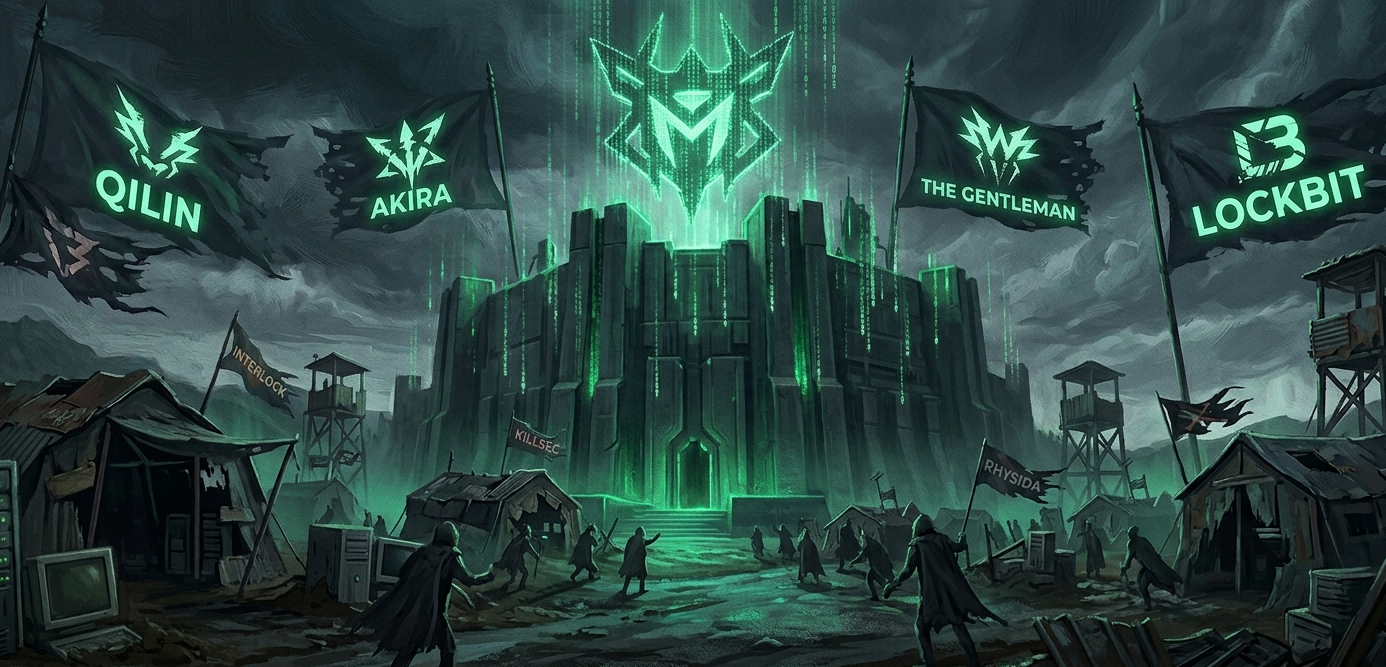
What happened to the smaller players? Fourteen groups simply vanished from the scene, and while 21 new names popped up, most were little more than digital gnats, posting fewer than 10 victims each. This is a classic pattern in the cybercrime underworld: law enforcement crackdowns scatter the less resilient players, and the survivors, those who manage to evade the digital dragnet, absorb the displaced talent. Groups like Qilin, Akira, The Gentlemen, and LockBit didn’t just survive; they thrived, claiming a whopping 41% of all victims in Q1. Qilin alone out-produced the combined efforts of the bottom 50 groups! It’s like the titans of tech not only surviving a regulatory storm but emerging stronger, with more resources and talent.
The RaaS Renaissance: Why Consolidation Matters
This isn’t just about numbers on a spreadsheet. The consolidation of the ransomware landscape around fewer, dominant operators fundamentally alters the game. Think about the business model. Larger RaaS brands, the ones now flexing their muscles, have a vested interest in operational consistency. Why? Because their reputation, and thus their revenue, depends on victims believing that paying them actually results in functional decryption tools. A broken decryptor, or worse, a permanently unrecoverable file—like those orphaned by Obscura’s encryption bug—is bad for business for these giants.
Contrast this with the fragmented landscape of 2025. Dozens of ephemeral operators had little incentive to invest in reliable decryption. They were in, grab the data, grab the cash, and disappear before the digital dust settled. For defenders and incident responders, facing fewer but more potent adversaries means a different kind of challenge. It’s about understanding the playbook of a few highly sophisticated, well-resourced entities, rather than trying to keep tabs on a hydra with a thousand heads.
The Gentlemen Ascend: A Breakout Star
While Qilin continues its reign, the real story of Q1 2026 is the meteoric rise of The Gentlemen. This group absolutely exploded, going from a modest 40 victims in Q4 2025 to a massive 166 in Q1, catapulting them into third place globally. That’s a 315% surge. And it’s not just them. LockBit 5.0 also made a significant comeback, posting 163 victims and climbing to fourth place after a 106% increase in activity. Nightspire, a more closed-door operation, expanded by 183% to 82 victims, and Play saw a solid 64% jump to 121 victims. These are the groups actively absorbing the talent pool and expanding their reach.
It’s a stark contrast to the groups that are fading away. SafePay, for instance, took a nosedive, falling 77% to just 22 victims before its DLS went inactive for an extended period. Devman also saw a sharp decline of 70%. These are the signs of groups struggling to adapt in this new, consolidated environment.
The most significant structural development seen in Q1 2026 is not the volume of attacks but the consolidation of the different operators conducting them.
This isn’t just about the number of attacks; it’s about the nature of the threat. The era of decentralized, chaotic ransomware is giving way to a more centralized, organized, and potentially more impactful threat. It’s a new platform, and we’re only just beginning to understand its implications.
Why This Consolidation Matters for Defenders
This shift from fragmentation to consolidation fundamentally alters the risk landscape. For security teams, it means shifting from a strategy of broad, diffuse threat hunting to a more focused, intelligence-driven approach. Understanding the capabilities, tactics, and motivations of these dominant groups becomes paramount. They are more likely to have the resources for sophisticated social engineering, zero-day exploits, and advanced evasion techniques. The days of relying solely on basic endpoint protection might be fading into history. This is a call to arms for more proactive, adaptive security postures. The RaaS giants aren’t playing around anymore.
The Future of Ransomware: Giants and Their Allies
So, what’s next? We’re likely to see these dominant groups continue to refine their RaaS platforms, attracting affiliates with better tools and higher payout percentages. Expect more sophisticated attacks, potentially targeting critical infrastructure or large enterprises with greater precision. The fragmentation we saw was a symptom of immaturity; the consolidation we’re seeing is a sign of a maturing, albeit terrifyingly effective, criminal enterprise. It’s less like a street brawl and more like a meticulously planned corporate raid, on a global scale.
🧬 Related Insights
- Read more: Incident Response Planning: A Step-by-Step Guide for Organizations
- Read more: QR Code Traps and Ghost Joins: Inside the NCSC’s Warning on WhatsApp and Signal Hacks
Frequently Asked Questions
What does data leak site (DLS) mean? A data leak site (DLS) is a website where ransomware groups publish stolen data from victims who refuse to pay a ransom, putting pressure on them to comply.
Is ransomware always successful? No, but its success rate is increasing, especially with consolidated groups that have more resources to develop advanced attack methods and more incentive to ensure decryption works to maintain their reputation.
Will this consolidation make ransomware less frequent? Probably not. While the number of distinct groups might decrease, the impact and sophistication of attacks from the dominant players could increase, meaning more damage from fewer sources.